
Real Estate
Messi becomes first to win MLS Golden Boot in consecutive seasons
By Katherine Langford
Advertisement · Why this ad?
Marcus manages the day-to-day editorial workflow across all brands, coordinating coverage assignments and ensuring editorial standards are met. He previously served as city editor at the Pioneer Press and holds a degree in Political Science from Carleton College.
More from Marcus →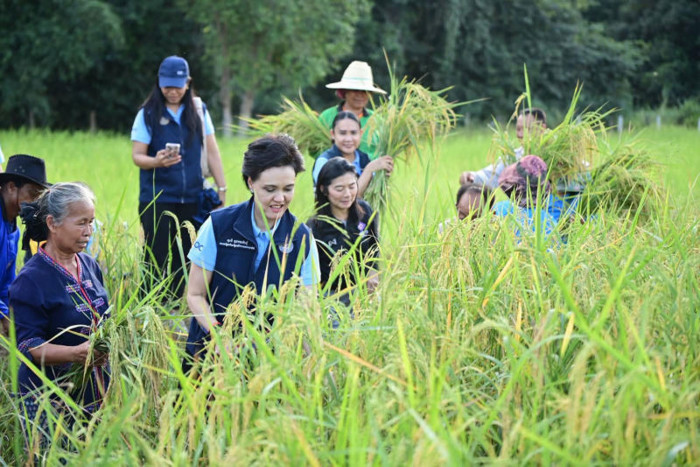
Business General A proposal to seed the future Trade partners are pushing for a framework on seed usage and plant breeding, but farmers and civil society groups are wary PUBLISHED : 7 Nov 2026 at 04:30 NEWSPAPER SECTION: Business WRITER: Somhatai Mosika Listen Small Medium Large Share Facebook Reddit Copy Link The debate over Thailand's potential adoption of the 1991 International Convention for the Protection of New Varieties of Plants (UPOV 1991) highlights crucial issues regarding the control of seed use, the plant breeders' rights, and what stronger intellectual property protection could mean for Thailand's agricultural sector, farmers and consumers. This Explainer examines the key concerns and explores what adopting the international framework could mean for the country's agricultural future. What is UPOV 1991? UPOV 1991 is an international agreement established to protect new plant varieties, granting plant breeders exclusive control over the production, propagation and sale of propagating material. Others must secure permission before using protected varieties for activities covered by the agreement. Thailand is not a member of UPOV and currently manages plant variety protection under the Plant Varieties Protection Act of 1999. Under UPOV 1991, breeders of protected new plant varieties can control how their seeds and other planting materials are produced, prepared, stored, sold, imported and exported. Farmers can use purchased seeds for normal farming, but the ability to save seeds for future planting depends on each country's regulations and exceptions. Which plant varieties qualify for UPOV 1991 protection? To qualify for UPOV 1991 protection, a plant variety must meet four criteria. The first is novelty: the plant must not have been commercially sold beyond the permitted time limit. Next is distinctness: the plant must have at least one clear feature that sets it apart from existing varieties. Uniformity is another criterion: plants of the same variety must have consistent key characteristics. The final concern is stability: important characteristics must remain unchanged across generations. Even for plants that meet all four criteria, applicants must also complete the legal registration process in the country where they seek protection. Why is UPOV 1991 controversial in Thailand? UPOV 1991 became controversial during negotiations for a free trade agreement (FTA) between Thailand and the European Union (EU) when the latter proposed both parties protect plant variety rights in alignment with UPOV 1991. The EU's proposal is a starting point for discussions and does not reflect any agreement by Thailand. Negotiations are ongoing and Thailand has not taken a stance on joining UPOV. Thai opponents to UPOV include farmers, civil society groups and non-governmental organisations that are concerned the framework will restrict seed saving and reuse. Thai farmers traditionally save seeds for subsequent planting season or share and exchange them within their communities. UPOV 1991 could impose strict restrictions on these practices, potentially making it illegal to save seeds from protected varieties. Moreover, farmers may have to purchase new seeds from companies each planting season, which would increase their production costs. Opponents argue that UPOV 1991 could grant breeders and seed companies exclusive rights for 20-25 years, extending protection to harvested products and other propagating materials. They are concerned this framework may increase market concentration among large seed companies. Critics also fear that pollen from protected varieties could spread into neighbouring farms and cross-pollinate with local crops, potentially exposing farmers to unintentional infringement claims, threatening food sovereignty and biodiversity in Thailand. What do specialists say about these concerns? The Agriculture Department and the Thai Seed Trade Association (TSTA) said bringing Thai regulations in line with UPOV 1991 is expected to encourage companies to invest in R&D of new plant varieties, while also protecting the rights of breeders and elevating Thailand's agricultural standards to international levels. In addition, the move would support FTA negotiations with other countries. Regarding production cost and seed prices, the TSTA said if market mechanisms remain unchanged, there will be no significant impact on seed prices. The association emphasised that Thailand currently allows farmers to select plant varieties freely without restriction. More new varieties will give farmers more choices and help prevent sharp price increases. Seeds account for 10-15% of farmers' total production costs, according to TSTA. In terms of seed collection and replanting, the Agriculture Department said if a farmer purchases 1 kilogramme of rice seed, he or she can cultivate and collect their own seeds for future planting on their farms, in addition to selling the cultivated rice. However, farmers are prohibited from using seeds from protected varieties bought commercially for propagation and resale. How do other countries protect plant varieties? Aat Pisanwanich, a lecturer at the Institute of Economics, Rangsit University, pointed to the plant variety protection laws of Vietnam, Indonesia and India as examples, as all three have FTAs with the EU. Vietnam was the first developing country in Southeast Asia that acceded to UPOV in 2006. The country's protection of breeders' rights follows UPOV 1991, while the Vietnam-EU FTA entered into force on Aug 1, 2020. After joining UPOV, the number of new plant varieties developed by companies in Vietnam increased by 50%, said Mr Aat. Meanwhile, the prices of seeds from protected varieties are 6-8 times higher than those of unprotected varieties, increasing production costs and limiting individual farmers' access to seeds, he noted. Vietnam's plant breeding sector is not entirely dependent on private or foreign companies. The government continues to play an important role in research, genetic resource conservation and technology transfer in collaboration with various stakeholders, said Mr Aat. Indonesia follows UPOV 1991 protections with certain exceptions, and its FTA with the EU is expected to take effect around January 2027. India is not a member of UPOV and complies with the Agreement on Trade-Related Aspects of Intellectual Property Rights. The country protects the rights of both breeders and farmers. Although India does not follow UPOV rules, it concluded FTA negotiations with the EU and both parties are scheduled to sign the agreement on Dec 16, 2026. How can Thailand implement parts of UPOV 1991 without compromising farmers' rights? If Thailand adopts UPOV standards, Mr Aat estimates crop production costs could increase by up to 1,000 baht per rai. Production costs for rice would likely rise by 125-500 baht per rai, for feed corn by 200-800 baht per rai, for sugar cane by 250-1,000 baht per rai, and for tapioca by 125-500 baht per rai. He said he anticipates rice-based products may be 4% more expensive for consumers than current prices. Mr Aat recommends before making any decisions, the government should clearly establish exemptions to protect farmers' rights and develop a well-defined plant breeding and seed distribution system. Thailand should also assess the potential benefits and implications for rights and interests across the food supply chain, Thai exports and the broader economy of following UPOV 1991 guidelines, he noted. In addition, the government should implement support measures for farmers and establish continuous monitoring systems to track market competition and farmers' access to plant varieties, said the lecturer. Meanwhile, the TSTA said Thailand needs to update its Plant Varieties Protection Act of 1999 to reflect current realities. The association proposed the government clarify the definition of general domestic plant varieties to better di
By Katherine Langford

By Katherine Langford

By Marcus Chen

By Katherine Langford