
Technology
Sojitz signs agreement to acquire 5% of Vietnam tungsten supplier Masan High-Tech Materials
By Marcus Chen
Advertisement · Why this ad?
Katherine oversees editorial operations across all six brands. Before joining The Meridan Group, she spent 14 years at the Minneapolis Star Tribune, where she led the metro desk through its digital transformation. She holds a Master's in Journalism from Northwestern's Medill School.
More from Katherine →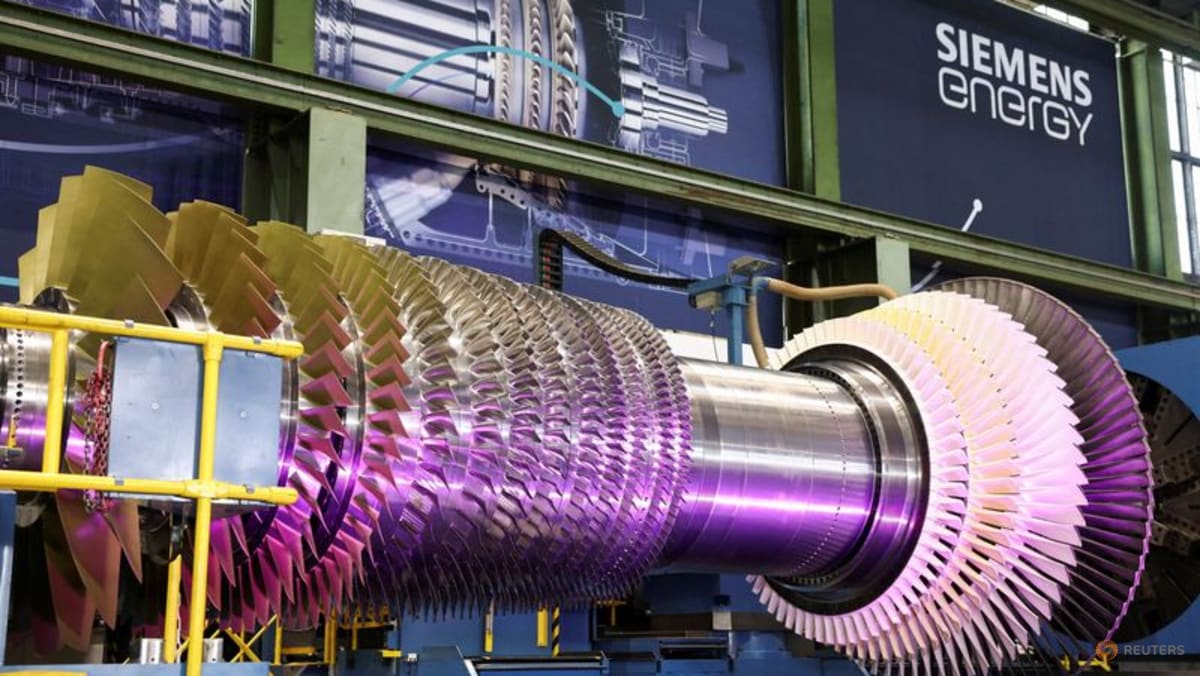
Advertisement Business Analysis:AI power rush sends data centres hunting for used turbines and jet engines 09 Nov 2026 02:13PM Bookmark Bookmark Share WhatsApp Telegram Facebook Twitter Email LinkedIn Set CNA as your preferred source on Google Add CNA as a trusted source to help Google better understand and surface our content in search results. Read a summary of this article on FAST. Get bite-sized news via a new cards interface. Give it a try. Click here to return to FAST Tap here to return to FAST FAST BENGALURU/FRANKFURT/LONDON, Nov 9 : Utilities, developers and firms racing to power AI data centres are scouring the world for second-hand gas turbines, reviving mothballed machines and converting retired jet engines, as lead times for costly new equipment stretch into the next decade. Despite growing scepticism over the perils of artificial intelligence technology and a recent selloff in related stocks, demand for energy-hungry data centres is soaring, creating a critical bottleneck for essential power infrastructure and equipment, such as turbines. "Delivery conversations (are) firmly focused on the 2030 to 2031 window," Aurora Tenorio, senior analyst at energy consultancy Wood Mackenzie, said about the US turbine market. That is prompting some companies to search for second-hand and refurbished equipment as well as turbines based on jet engines rather than wait for order backlogs to clear, according to more than a dozen brokers, service firms and suppliers. CNA Games Guess Word Crack the word, one row at a time Buzzword Create words using the given letters Mini Sudoku Tiny puzzle, mighty brain teaser Mini Crossword Small grid, big challenge Word Search Spot as many words as you can Show More Show Less "That secondary market is very, very hot right now," said Ana Amicarella, CEO of EthosEnergy, an equipment services provider. "We also have seen an escalation on the prices of what people are demanding." Can this market be the answer to the power supply squeeze? Probably only partially, said Noor Qureshi, an associate at Enverus Intelligence Research. "The market is already constrained, with limited excess supply, so it is unlikely to offset a meaningful share of the delays," she said. Turbines are also just one obstacle, with air permits, grid access and other factors also causing delays. There are no reliable estimates of how much the secondary market is contributing to the global turbine supply worth about $25 billion a year. Its very emergence, though, attests to the profound impact the data centre boom has had across industries. AI infrastructure firm Crusoe, for example, in April ordered 13 so-called aeroderivative gas turbines from US-based ProEnergy — which are based on jet engines made by GE Aerospace — describing it as a strategic move to scale fast. The turbines, with a joint capacity of 650 megawatts (MW), will be deployed at Crusoe's AI data centre projects in the US. ProEnergy and Crusoe did not respond to Reuters requests for additional information. Data centres and their operators have emerged as big customers of gas turbines, a market that almost solely catered to traditional utilities until a few years ago. Today, worldwide orders top 100 gigawatts (GW), according to Wood Mackenzie, well above the estimated global production capacity of between 60 GW and 70 GW. Analysts at investment bank Jefferies estimate that US data centres alone account for nearly 17 GW of demand this year and that figure can more than triple by 2028. While global gas turbine manufacturing capacity is growing and is expected to rise to around 87 GW in 2028, it will still be well short of the 129 GW in expected turbine power demand, they said. Siemens Energy, GE Vernova and Mitsubishi Heavy Industries, which dominate the market, all say the AI boom has driven orders beyond their production capacity. In the United States, delivery of a gas turbine now takes six years on average, said Tenorio. Used, refurbished or repurposed equipment comes with its own challenges. Overhauled turbines can have unclear maintenance histories, limited life left and weak long-term servicing, Tenorio said. Converted jet engines raise questions about how fit they are for continuous work as power generators. Still, waiting times counted in years ensure the market's appeal. "Every few weeks we get a request to say, 'Can you find a used gas turbine to put into a data centre?'" said Darayus Pardivala, who leads the US aftermarket business of Sulzer. Pardivala would not disclose details about the clients or the centres' locations. Costs matter too. Well-maintained used units can sell for about $1.5 million to $1.7 million per MW, and refurbished units for about $1.3 million, according to Zach Machuca, managing partner at Origin Partners, which buys power equipment for data centre developers. That is markedly less than new turbines, which cost about $2 million to $2.5 million per MW, according to Aurora Energy Research. The discount can be greater for smaller, cheaper units. Dan Poole, general manager at ReflowX, which connects buyers with turbine owners, said two 14.5-MW turbines made by Solar Turbines, a Caterpillar unit, recently sold for $12.5 million, or around $430,000 per MW. New ones would cost about $35 million and take five years to deliver, he said, without disclosing the buyer. Pressed for time, developers turn to small turbines if the bigger ones are hard to come by. They sometimes deploy more than 100 at a single site and mix models and brands, said Scott Schreeg, director of sales at US equipment supplier SVI Bremco. The AI boom is affecting players far beyond data centres. The Tennessee Valley Authority, a federally owned US utility, said prices for all equipment — new, used or refurbished — have "increased significantly" over the past two years. Jim Matheson, CEO of the National Rural Electric Cooperative Association, which groups non-profit utilities owned by their customers, said its members were facing unprecedented lead times and surging prices. "Co-ops that need new capacity are turning to every viable option," including purchasing refurbished turbines, he said. The rush for gigawatts has also opened new markets for alternatives to the scarce gas turbines. Finland's Wartsila has booked around 3 GW of orders since spring last year from US data centres for power units running on gas engines instead of turbines, Anders Lindberg, president of the group's energy business, said. "What's driving the market? Lead times, lead times, lead times," he said. Source: Reuters Newsletter Week in Review Subscribe to our Chief Editor’s Week in Review Our chief editor shares analysis and picks of the week's biggest news every Saturday. Sign up for our newsletters Get our pick of top stories and thought-provoking articles in your inbox Subscribe here Get the CNA app Stay updated with notifications for breaking news and our best stories Download here Get WhatsApp alerts Join our channel for the top reads for the day on your preferred chat app Join here Advertisement Also worth reading Content is loading... Advertisement Expand to read the full story Get bite-sized news via a new cards interface. Give it a try. Click here to return to FAST Tap here to return to FAST FAST
By Marcus Chen

By Marcus Chen

By Marcus Chen

By Katherine Langford