Business
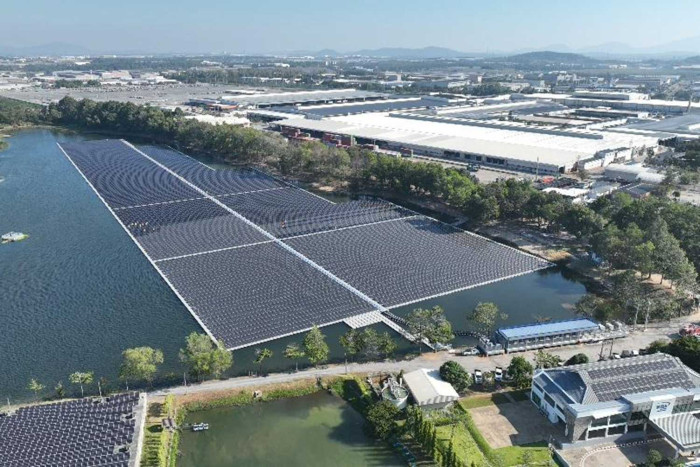
WHAUP plans to expand renewables business
By Katherine Langford
Advertisement · Why this ad?
Marcus manages the day-to-day editorial workflow across all brands, coordinating coverage assignments and ensuring editorial standards are met. He previously served as city editor at the Pioneer Press and holds a degree in Political Science from Carleton College.
More from Marcus →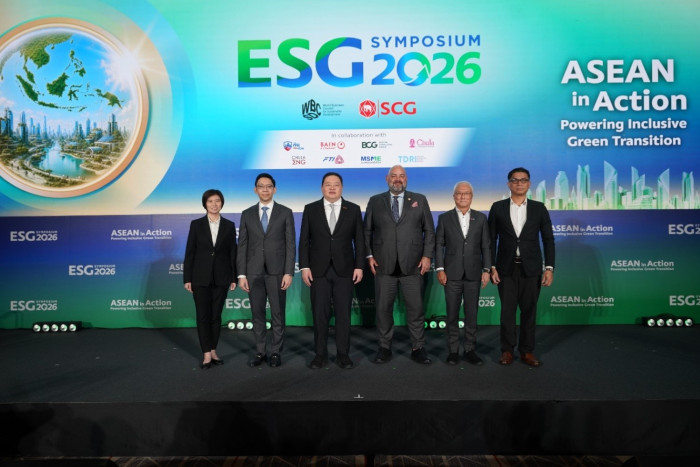
Business General Green transition as Thailand's next growth engine SCG is calling for the 4P Model to turn Thailand's low-carbon ambitions into new opportunities for economic growth and competitiveness. PUBLISHED : 10 Nov 2026 at 14:00 BRANDED CONTENT Small Medium Large Share Facebook Reddit Copy Link As a key corporate partner of the Global Compact Network Thailand (GCNT), SCG is contributing its experience from one of Thailand's major industrial sectors to help translate sustainability commitments into practical action. Through its collaboration with the World Business Council for Sustainable Development (WBCSD) and other public- and private-sector networks, SCG is working to advance solutions beyond awareness and towards implementation. Building on three interconnected priorities including energy transition, just transition and climate adaptation, SCG is advocating stronger collaboration among government, business and communities to accelerate Thailand's green transition while maintaining economic competitiveness. A key element of SCG's approach is the Public-Private-People Partnership (4P) model, which brings together government policy and enabling conditions, private-sector technology and investment and local communities' understanding of area-specific needs. Thammasak Sethaudom, president and CEO of SCG, said the experience of the past year had demonstrated that the 4P approach could deliver tangible results. “The public sector creates conditions conducive to action, the private sector brings technology and capital to experiment, and the people's sector participates in defining the needs of each area,” he said. SCG has drawn lessons from the Saraburi Sandbox, where stakeholders have worked together to address local challenges and develop practical solutions. The company sees the model as a potential blueprint for other areas, beginning with an assessment of local needs and challenges, followed by the identification of suitable partners and solutions. The approach is intended to create practical models that can be scaled to other regions and potentially support cooperation with international partners. Three key agendas: From progress to challenges aheadThree key agendas: From progress to challenges ahead 1.Energy transition: Lower cost - secure energy The discussion highlighted the need to strengthen the readiness of Thailand's energy system by increasing the capacity and flexibility of the power grid, adopting grid-forming technologies and aligning the Power Development Plan (PDP) with future energy demand. New technologies and energy sources, including Small Modular Reactors (SMRs) and biofuels, as well as regional cooperation through the Asean Power Grid, were also identified as areas for further development. Dr Areeporn Asawinpongphan, research fellow in energy policy at the Thailand Development Research Institute (TDRI), called for greater policy and regulatory clarity on the PDP, direct power purchase agreements (DPPA), third-party access (TPA) and wheeling charges. She also stressed the need to modernise the grid to support renewable energy expansion, establish transparent and fair electricity pricing and develop a more flexible power market while balancing energy security with economic competitiveness. 2. Just transition: SMEs, workers and communities remain competitive The next phase includes initiatives such as Funding Connect and SME Green Transition Plus to help industrial SMEs gain access to knowledge, technology, financing and new business opportunities. Veerachai Monsintorn, vice-chairman of the Federation of Thai Industries (FTI) and chairman of the Small and Medium Industry Institute and Thai-Chinese Economic and Investment Institute, said support must be tailored to the capacity of individual businesses to adapt. He proposed beginning with a selected pilot group to develop a comprehensive model covering knowledge, technology, skills, standards, market access and funding, before applying lessons more broadly. The goal is to ensure entrepreneurs, workers and communities can participate in the green economy and benefit from its growth. 3. Climate adaptation: Advance preparedness costs less The initiative is also focusing on an AI Simulation Platform to assess flood risks and infrastructure vulnerability, with plans to make the platform publicly accessible and eventually explore Asean-level risk mapping and simulation for floods, storms and other disasters. Asst. Prof. Dr. Pongsak Suttinon, Academic Committee Member, Water Resilience Center and Head of the Department of Water Resources Engineering, Chulalongkorn University, called for a shift from responding after disasters occur to forecasting and reducing risks in advance. He proposed a One Water Data Centre integrating water data, forecasting and early warning systems with local communities, alongside investment in dual-use infrastructure that can serve both normal and emergency conditions. He also proposed expanding water management towards a Water Economy to reduce losses, maintain business continuity and create economic and social value for local communities In conclusion, Mr Thammasak said stronger collaboration among sectors could accelerate the green transition while strengthening Thailand's competitiveness. “If we can expand this kind of collaboration in a concrete way, it will accelerate change and build a competitive economy while effectively addressing climate change. Most importantly, it will open the way for every sector to grow together,” he said. KEYWORDS Thailand green transition Scg sustainability Energy transition thailand Climate adaptation strategies Public private people partnership Saraburi sandbox Renewable energy policy COMMENT
By Katherine Langford

By Marcus Chen

By Katherine Langford

By Katherine Langford