
Government
Indonesia haze cost Malaysia US$1.97 billion in losses: study
By Katherine Langford
Advertisement · Why this ad?
Marcus manages the day-to-day editorial workflow across all brands, coordinating coverage assignments and ensuring editorial standards are met. He previously served as city editor at the Pioneer Press and holds a degree in Political Science from Carleton College.
More from Marcus →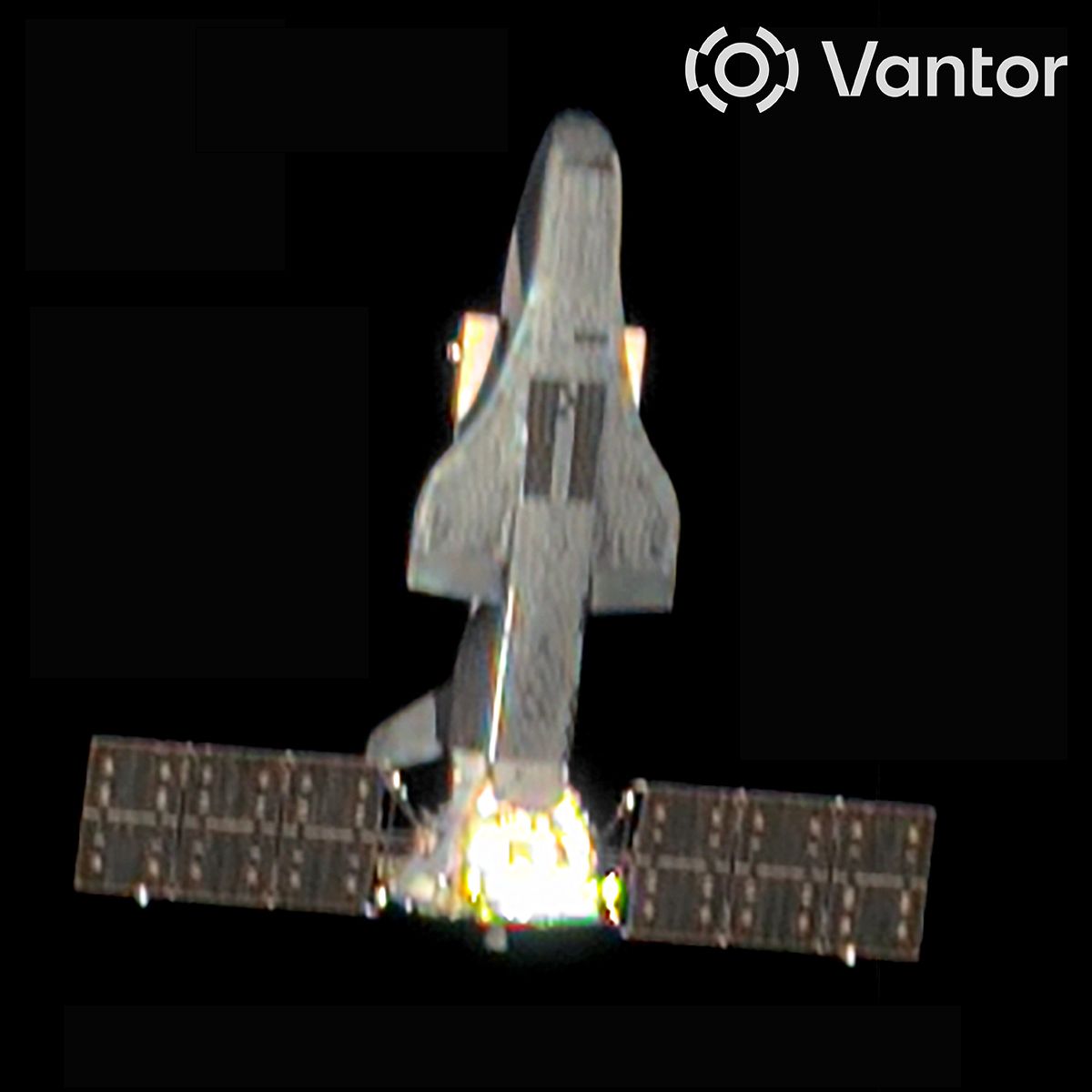
Stephen Clark, Ars TechnicaScienceOct 29, 2026 4:45 PMWhat to Know About China’s Top-Secret SpaceplaneThis week, the Pentagon released a full-resolution image of the vehicle, the capabilities of which remain rather mysterious.The spacecraft was caught on camera by a commercial satellite in low orbit.Satellite image ©2026 VantorSave StorySave this storySave StorySave this storyA winged Chinese spacecraft bearing a strong resemblance to the US military’s X-37B spaceplane was photographed in orbit by a passing US-owned commercial satellite in 2024, and we finally have the image.The Chinese spaceplane has delta wings, payload bay doors, a dark heat shield, and a rear-mounted service module with power-generating solar arrays. In other words, the design of the winged ship is, to a great degree, a copy of the X-37B spaceplane flown by the US Space Force.The photo was taken by a commercial imaging satellite owned by a company called Vantor, known as Maxar in 2024. Vantor is one of several companies that provide reconnaissance imagery of locations around the world to the US military and US intelligence agencies. The same Earth-imaging satellites can point their telescopes at objects in space.Lower-resolution views of a Chinese spaceplane showing the vehicle’s general shape were publicly available before the Defense Intelligence Agency assessment. A US Space Force official revealed Maxar’s observation at a 2024 conference in South Korea, but the Pentagon did not release the full-resolution image to the public until Monday, when it appeared in an unclassified DIA assessment of threats to the United States in space.Catch and ReleaseThe DIA report doesn’t reveal much new about what the Chinese spaceplane does in orbit. China has launched four spaceplane missions since 2020, with durations of up to nine months. The fourth mission is in orbit today after launching in February. It is not publicly known whether China has one or more such spaceplanes in its inventory.The Space Force has two X-37Bs flying in rotation, with the longest of their eight missions to date running two-and-a-half years from launch until landing. US officials have released photos of the X-37B vehicles, published information about their design and dimensions, and disclosed a handful of experiments they have carried into orbit. Most of the X-37B’s activities in space are classified.Like the X-37B, China’s spaceplane lifts off inside the payload shroud of a conventional rocket, then operates as a satellite once in orbit. The spaceplane flies like a miniature unpiloted version of NASA’s Space Shuttle and reenters the atmosphere for an autonomous land runway landing at the end of each mission. Ground teams then refurbish it for another flight.The “enhanced maneuverability” of spaceplanes makes them “more suitable for certain missions than traditional satellites,” the DIA said in its report. So far, the Chinese spaceplane has only flown in low-Earth orbit (LEO) at an altitude of a few hundred miles. One of the Space Force’s X-37B flights soared to an altitude of more than 24,000 miles before using aerobraking to set up for reentry and landing.Spaceplanes like China’s and the X-37B can also deploy small satellites from their cargo bay. Most recently, China demonstrated an ability to catch an object in orbit, perhaps using a robotic arm. The vehicle now in space released a sub-satellite in June and recaptured it in July, then did the same thing again in August and September, according to an analysis of open source orbital tracking data by Jonathan McDowell, an astrophysicist who catalogs spaceflight activity.A Fleeting GlanceThe official name of the Chinese spaceplane is even a mystery. It is often called Shenlong in Western publications, citing reports from the 2000s about China’s development of a robotic spaceplane. Chinese state media only refer to the vehicle as Chongfu Shiyong Shiyan Hangtian Qi, or CSSHQ, which means reusable experimental spacecraft, according to a fact sheet published by the Secure World Foundation.The DIA did not disclose the exact circumstances of Maxar’s observation of the Chinese spaceplane, such as its timing, location, or distance, but Earth observations often use cameras to view other objects in space as their orbits intersect, an emerging field known as non-Earth imaging (NEI).NEI allows commercial operators and government analysts to inspect satellites. This is especially useful for gleaning information about classified or proprietary satellite designs, extending a new avenue for international and corporate espionage to the high frontier.The capability exhibited by Maxar and other commercial companies in the NEI field is distinct from the recent actions of some military spacecraft, such as Russia’s Kosmos 2612, which deliberately maneuvered to approach a US-registered radar imaging satellite earlier this month. Commercial NEI observations come from chance encounters, often at extremely high speed.Pew-Pew With DEWsThe DIA’s assessment of space threats includes an update on China’s pursuit of anti-satellite technology, or “counterspace” weapons. The intelligence agency reported the Chinese military likely considers directed-energy weapons (DEWs) “ideal counterspace systems” because they can be used to permanently or temporarily disable a satellite. One potential use for lasers in space would be to dazzle a sensor on an adversary’s satellite.“China has multiple ground-based laser weapons with varying power levels to disrupt, degrade, or damage satellites in LEO,” the DIA said. “By the late 2020s, China may field space-based directed energy systems and higher-powered ground-based directed energy systems capable of threatening satellites in higher orbits.”The DIA noted China’s testing of ground-based anti-satellite missiles and the country’s historic demonstration last year of satellite refueling in geosynchronous orbit, a regime some 22,000 miles (36,000 kilometers) over the equator, something no other country
By Katherine Langford

By Katherine Langford

By Marcus Chen

By Katherine Langford